What is BBS?


Actor portrayals
Bardet-Biedl (pronounced BAR-day BEED-el) syndrome, also known as BBS, is a rare genetic disease that can cause obesity
BBS has a wide range of symptoms that can impact many systems in the body
Signs and symptoms of BBS
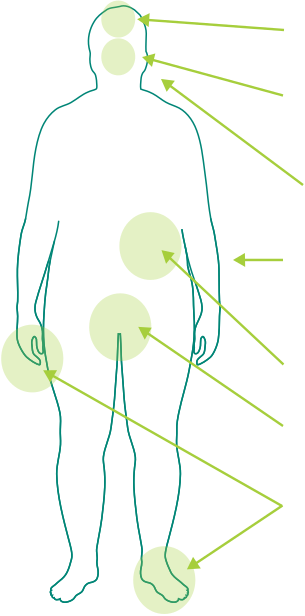
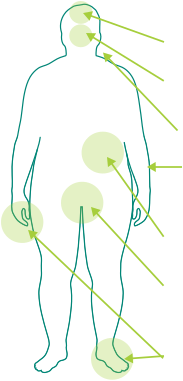
- Learning disabilities
- Visual impairment
- Hyperphagia
- Obesity (any age) or overweight (<2 years old)
- Kidney problems
- Genital and hormonal problems
- Extra toes or fingers (polydactyly: paa•lee•dak•tuh•lee)
Other symptoms of BBS may include:
- Brain: Speech delay, developmental delay, poor coordination, partial or total loss of smell
- Skeletal: Dental problems, shorter or webbed toes or fingers
- Craniofacial (related to the bones and soft tissue of both the skull and the face): Noticeable characteristic facial features
- Body organs: Differences in organ positioning
- Hearing: Hearing loss
Heart defects may be observed in people with BBS.
Unlike other forms of obesity, obesity due to BBS is caused by variants, or changes, in a BBS gene. BBS genes are inherited, meaning they are passed down from parent to child, and affect how the brain controls hunger.
The symptoms of BBS may affect multiple parts of the body, vary in severity, and change with age. While the symptoms shown here are some of the most common, not all people with BBS will experience every symptom listed.
IMCIVREE is the first and only treatment that targets a root cause of obesity and hunger in people living with BBS.
What is hyperphagia?
Hyperphagia (pronounced hi-per-FAY-juh) is constant, hard-to-control hunger that does not go away
Not all hunger is the same. Constant, hard-to-control hunger due to BBS is different from typical hunger and known as hyperphagia. The majority of people living with BBS experience hyperphagia – and may suspect that it’s different from the type of hunger most others feel.
Typical Hunger
- Feeling hungry in between meals
- Having cravings from time to time
- Eating past fullness at big occasions like Thanksgiving
- Eating to feel happy, when you’re bored, or during times of stress (emotional eating)

Constant, Hard-to-Control Hunger (Hyperphagia) Due to BBS
- Feeling hungry all the time
- Having continual thoughts about food
- Eating throughout any given day because you never feel full
- Eating to feel less hungry but never achieving a feeling of fullness
What does hyperphagia look like?
Caregivers often observe these behaviors even if a child can’t share their feelings:
- Demanding or negotiating for food
- Tantrums when food is unavailable
- Waking up at night to find food or staying awake because of hunger
- Night eating, sneaking food, or hiding food
Adults may experience these common behaviors of hyperphagia:
- Planning the day around food
- Feeling sadness, frustration, guilt, or anxiety when food isn’t available
- Waking up in the middle of the night to eat or staying awake because of hunger
- Hiding or sneaking food
It’s important to understand the differences between hyperphagia due to BBS and typical hunger. Recognizing the type of hunger you are experiencing is the first step in getting the right kind of help.
Talk to your doctor if you’re concerned that your hunger might be hyperphagia.
After her first birthday, we noticed a rapid weight gain, and she threw tantrums all the time. Looking back, I see this was most likely due to how hungry she felt.
– Caregiver of a patient taking IMCIVREE
One of the most challenging symptoms (of BBS) was hyperphagia. Even a birthday party was stressful. While all the kids were socializing, he was only concerned about food.
– Caregiver of a patient taking IMCIVREE
Before IMCIVREE, I didn’t realize how much time I spent focusing on food, and how much that was affecting my day-to-day and the other things I could be accomplishing.
– Person living with obesity due to BBS
I absolutely see varying degrees of hyperphagia, from extreme cases where patients have locks on cabinets and do not keep food in the home, to other less extreme cases where they’ve learned to adapt around it.
– Obesity and Weight Management Specialist
Individual results may vary.
Resources to support you along the way
Rhythm InTune Patient Education Managers (PEMs)* offer educational tools to help you learn more about BBS, and provide personalized ongoing support to help you stay informed throughout your treatment journey.
*Patient Education Managers are employees of Rhythm Pharmaceuticals and do not provide medical care or advice. We encourage you to always speak to your healthcare providers regarding your medical care.
Explore our resource library for additional support and information.